Decarbonizing your activities pays off more with AXIA Energia

METRIA

Calculate and offset your company’s carbon emissions right now with AXIA Energia

Start decarbonizing

Your decarbonization journdey starts here

Here you can access METRIA, our complete decarbonization solution.


Through METRIA, you can calculate and offset your company’s greenhouse gas emissions in a simple and easy way.


The platform was developed by the Electric Power Research Center (CEPEL) and uses recognized methodologies such as GHG Protocol, IPCC, and MCTI.

Placeholder

How it works:

  • account_circle
    You register First, you create your username and password. Then, you provide your company information (CNPJ, Legal Name, Trade Name, and Industry Sector) and answer a few questions about your business activities.
  • barcode_scanner
    METRIA calculates Based on your responses, METRIA calculates an estimate of the greenhouse gas emissions generated by your activities. The results are immediate, and you receive a simplified emissions report, broken down into Scopes 1, 2, and 3.
  • air
    Receive customized solutions This is where AXIA Energia’s differentiator comes in: you receive personalized decarbonization solutions, including Carbon Credit options and Renewable Energy Certificates (RECs), and you can choose and purchase the options that make the most sense for your company.
  • bolt
    Start decarbonizing
    Clique aqui
Click here

Need to clear up questions before deciding?

Talk directly to our specialists.


Personalized support to answer your questions about Decarbonization.


Response within up to 3 business days.

chat

Envie sua mensagem

Submitting
Icone de sucesso

Success

Your data has been submitted.
Icone de erro

Something went wrong

Please reload the form and try again.
I agree to share my information and be contacted about products and services.

Comprehensive solutions for Scopes 1, 2, and 3

vans

What is Scope 1?

Scope 1 emissions come from sources that are owned or directly controlled by your company, such as emissions from fuel combustion in your vehicle fleet or machinery. To offset these emissions, you can rely on our Carbon Credit solutions, a practical and effective way to advance your decarbonization strategy with credibility and impact.

minimize

Learn more about our solutions

Renewable Energy Certificates (RECs)

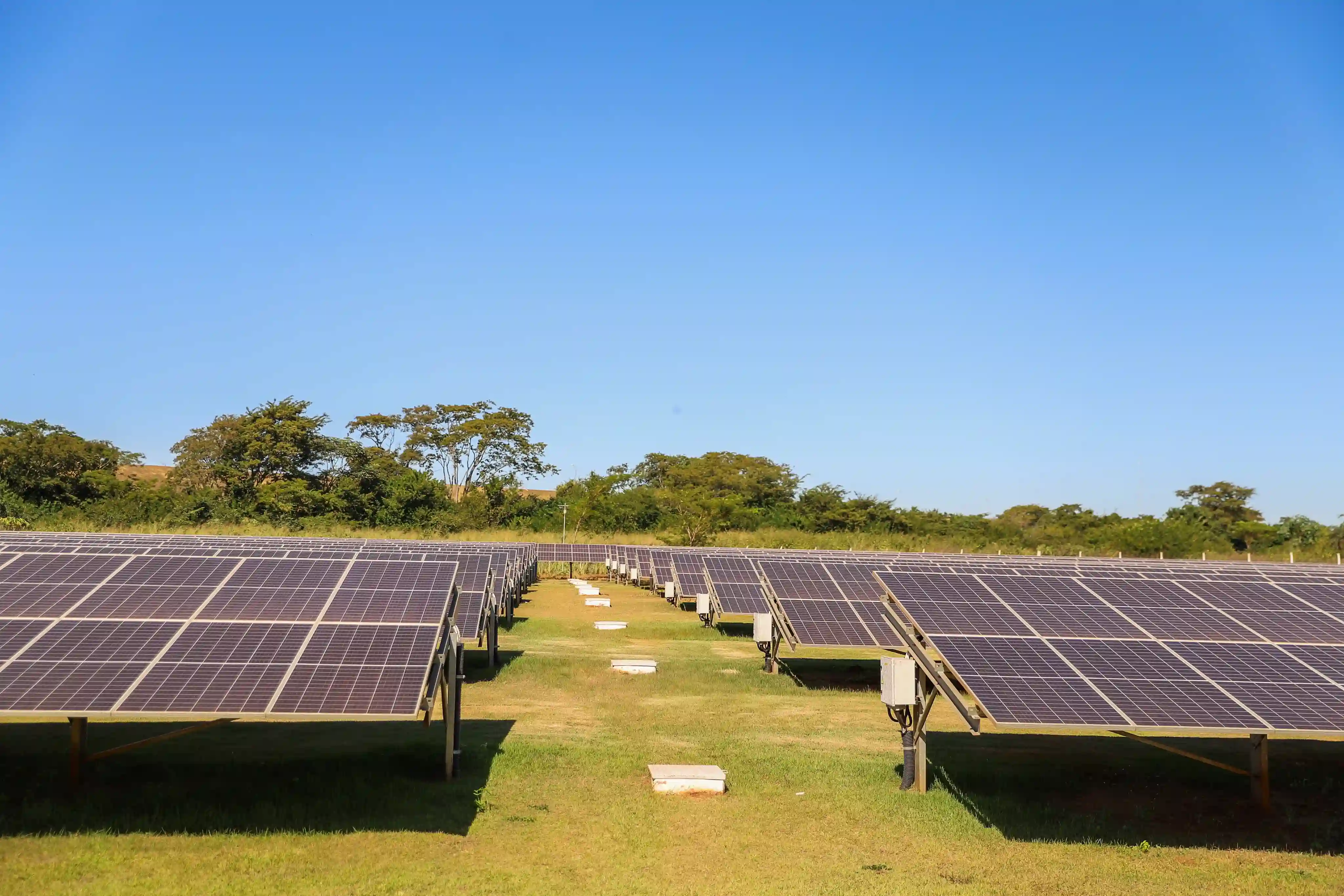
Renewable Energy Certificates (RECs) certify that the energy consumed by your company comes from renewable sources, such as hydropower and wind energy. As part of our Decarbonization Journey, we offer two types of certificates: I-REC and RECFY.

add

I-REC

I-REC is an international certification that guarantees the renewable origin of energy throughout the production chain of small, medium, and large companies, including those operating within the regulated energy market.
add

RECFY

RECFY is a renewable energy certificate exclusive to AXIA Energia, issued through a web-based platform that uses blockchain technology to ensure full traceability — from energy generation to certificate issuance.The platform is audited by Bureau Veritas and follows the principles of the GHG Protocol and ISO 14064.
add
energia

Carbon Credits

Carbon Credits are certificates used to neutralize greenhouse gas emissions by supporting sustainable projects such as reforestation and renewable energy generation. Each carbon credit represents 1 metric ton of CO₂ equivalent reduced or removed from the atmosphere.

add

Choose the solution that works for your business

selo de qualidade

Certifies with the Gold Seal of the Brazilian GHG Protocol Program

Frequently Asked Questions

  • About METRIA

  • About Decarbonization

  • About Carbon Credits and Certificates

METRIA is AXIA Energia’s web-based platform that enables users to complete a fully digital Decarbonization Journey.
Through the platform, businesses can calculate their greenhouse gas (GHG) emissions and access an e-commerce environment to purchase offsetting solutions for all three scopes: Carbon Credits and Renewable Energy Certificates (RECs).


The emissions calculation tool was developed by the Electric Power Research Center (CEPEL) — the leading R&D institution in the electric power sector in Latin America — and is based on the principles of the Brazilian GHG Protocol Program and the IPCC (Intergovernmental Panel on Climate Change), key global frameworks for addressing climate change.

The user must obtain data from emission sources and enter it into the calculation tool, which will assign values to these sources and quantify greenhouse gas emissions.


These calculations are based on the guidelines of the Brazilian GHG Protocol Program. If the user does not have all the detailed data from emission sources, the platform allows for an estimated calculation, which offers the same level of technical robustness provided by cepel.


It is important to note that the calculator does not make any value judgment regarding the data entered.
The user is fully responsible for verifying the accuracy and validity of the information provided during the calculation process.

Once all information related to the three scopes (Scopes 1, 2, and 3) has been completed, users can view the final emissions results directly on the screen.


If a more detailed document is required, users may purchase the full report. This final report can be used as a simplified greenhouse gas emissions inventory and may be publicly disclosed, as it is technically and methodologically robust, having been developed based on CEPEL’s models and emission factors.


However, for the document to be recognized as an official emissions inventory under GHG Protocol guidelines and national or international reporting programs, the data must be validated by an independent third party responsible for auditing the information provided by the user.


The platform does not perform data verification or audits and is limited to providing the calculation tool and the resulting technical report.

After selecting the desired products, users must confirm the purchase through the shopping cart. Please note that purchasing decarbonization products is optional, regardless of type or quantity.

Payments are made in a single installment via bank slip (boleto bancário) or PIX. Payment must be completed within 2 business days after receiving the bank slip.

After completing the purchase, users will receive a notification that their order is being processed. The bank slip will be sent to the email address registered in the company’s contact information.

In case of questions or issues, users can contact the After-Sales team via email: posvenda.comercial@axia.com.br

Certificates are issued within up to 7 business days after payment confirmation.

The certificate will be delivered by email, sent to the address registered in your company’s contact information.

Decarbonization is the process of reducing the emission of carbon dioxide (CO₂) into the atmosphere, either through the use of renewable energy, improvements in production processes, or by offsetting emissions.

It means that greenhouse gas emissions are balanced by removals, resulting in a net emission of zero.
This is achieved by offsetting emissions that could not be avoided, without necessarily reducing them.

It represents the total amount of greenhouse gases generated across the production chain and through human activities.

It means drastically reducing greenhouse gas emissions before offsetting what is unavoidable.
It prioritizes structural changes and emission reductions across the value chain.

All companies and individuals can decarbonize their activities, not only large corporations.
Greenhouse gas emissions are generated by many human activities across all sectors of society, and it is everyone’s responsibility to work toward reducing them.


Companies that generate large amounts of emissions, such as industries, airlines, and transportation companies, are often encouraged or required by public policies to offset their carbon emissions.
 

It is a set of guidelines and standards widely recognized globally for the accounting and management of greenhouse gas emissions by organizations.
It classifies emissions into three scopes:

  • Scope 1: direct Emissions from sources owned or controlled by the organization (for example, company-owned vehicles or machinery).
     
  • Scope 2: Indirect emissions resulting from electricity consumption, whether in the Regulated Contracting Environment (ACR) or the Free Contracting Environment (ACL).
     
  • Scope 3: All other indirect emissions associated with the organization’s activities that occur outside its direct control (for example, employee transportation, supply chain activities, and waste disposal).
    This scope generally represents the largest share of an organization’s total emissions.

It is a system that allows the trading of carbon credits between countries and organizations. It is divided into two main types:

  • Regulated market: established by governments or regulatory bodies, which set emission reduction targets for companies. Companies that fail to meet their targets may be required to purchase credits to offset the excess.
     
  • Voluntary market: driven by companies, ngos, and individuals who voluntarily choose to offset their emissions. Although it is not regulated by government laws, it is generally guided by certification standards established by non-governmental organizations.

They are certificates that represent the reduction or removal of one metric ton of carbon dioxide equivalent (tCO₂e).
They are part of emission offset mechanisms and function as a “currency” in the carbon market.  

Carbon Credits can receive different designations depending on the market, certification standard, and project type.
By type of certificate:

  • CER (Certified Emission Reduction): from the un clean development mechanism (CDM), linked to the kyoto protocol.
     
  • VER (Verified Emission Reduction) ou VCU (Verified Carbon Unit): credits from the voluntary market, usually certified by standards such as VCS (Verra), Gold Standard, among others.

By project type:

  • REDD+ credits: generated from projects aimed at reducing emissions from deforestation and forest degradation. These projects promote forest conservation or reforestation, with forests acting as carbon sinks that absorb large amounts of CO₂ from the atmosphere.
     
  • Renewable energy credits: generated by projects that produce energy from renewable sources such as wind, solar, hydropower, and biomass. They help reduce greenhouse gas emissions by replacing fossil fuel–based energy.
     
  • Carbon capture and storage (CCS) credits.

Price differences are influenced by factors such as location, project type, purpose, certification standards, and calculation methodologies for reductions or removals.


However, the main factor impacting price is the type of project. The market values what is scarcer, additional, and has a direct impact.

They are generated by projects that demonstrably aim to reduce or remove greenhouse gas emissions, such as renewable energy initiatives, energy efficiency improvements, reforestation, and industrial process improvements.


These projects are assessed and certified by independent organizations, follow specific methodologies, and undergo audits and validations to ensure that reductions are real, measurable, and additional (meaning they would not occur without the project).


This process ensures their reliability.

They are important because they offer a practical and cost-effective tool to address the climate crisis.
They are relevant in several dimensions:

  • They help combat climate change, since each carbon credit represents one metric ton of co₂ that was not emitted or was removed from the atmosphere.
     
  • They assign economic value to emission reductions, creating incentives for investments in clean energy, reforestation, regenerative agriculture, and other solutions.
     
  • They help companies meet esg and carbon neutrality goals, allowing organizations and individuals that cannot eliminate all emissions to offset part of them through certified credits.

Although offsetting is an important tool, companies should always prioritize reducing their own emissions.

Yes. After quantifying their emissions, companies can purchase carbon credits and recs to neutralize emissions from scopes 1 and 2, or from all three scopes, and disclose them in sustainability reports. This provides transparency to third parties and reinforces the company’s commitment to the esg agenda.

Both I-REC (International Renewable Energy Certificate) and RECFY Certify that a specific amount of electricity was generated from renewable sources such as hydropower, wind, solar, or biomass, and are used to offset Scope 2 emissions.


I-REC is a standard created by the I-REC tracking standard foundation, which establishes requirements for the registration and certification of power generation assets. It is widely used in parts of Asia, Africa, and Latin America.


RECFY is AXIA Energia’s proprietary certificate, issued through a web-based platform that uses blockchain technology to track energy from generation through certificate issuance. The RECFY platform and the registered generation assets were audited by bureau veritas, in accordance with the Brazilian GHG Protocol Program and ISO 14064.

The cost of implementing a decarbonization program depends on several factors, such as the company’s sector, sustainability maturity level, established goals (for example, carbon neutrality or absolute emission reductions), the scope of actions, and the chosen approach.


With the goal of facilitating access to decarbonization solutions and increasing awareness on this topic, AXIA Energia created METRIA.


Through this free tool, companies can calculate and understand their emissions, and plan reduction and/or offset actions aligned with their investment capacity.

Customer support